

Preventing Engine Failure
Starts With Component Integrity
Many major engine failures do not begin with a catastrophic event. They often begin with the gradual wear or failure of a piston ring.
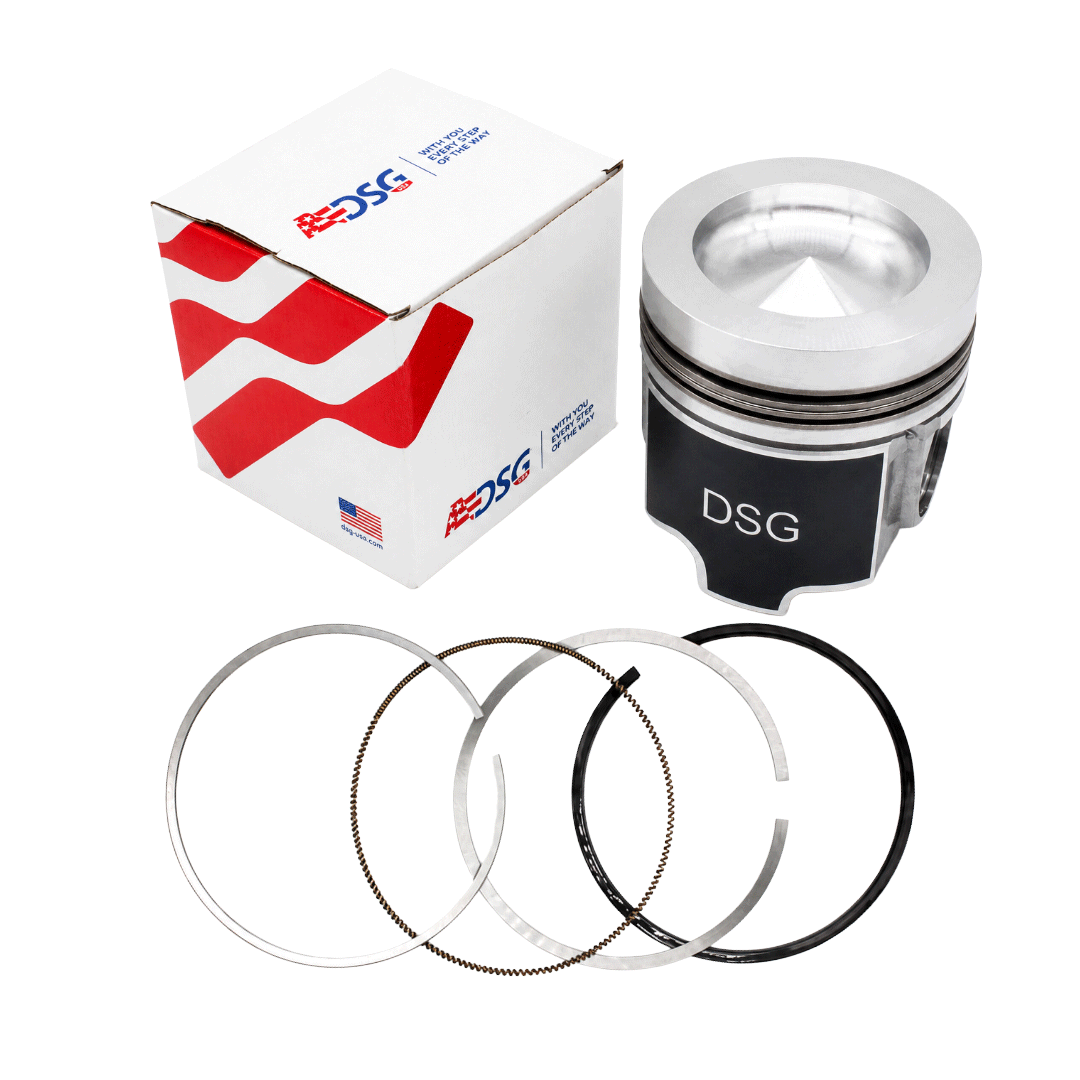
Piston rings are small components operating in one of the most demanding environments inside an engine. Their condition directly affects compression, lubrication, combustion efficiency and long-term engine reliability.
Major Failures Often Start Gradually
Engine damage does not always appear suddenly. In many cases, the process begins with progressive wear that reduces the ability of the piston rings to maintain an effective seal between the piston and cylinder liner.
As ring performance deteriorates, combustion pressure can escape, oil can enter the combustion chamber and friction between internal components can increase. When these conditions are ignored, a relatively small issue can develop into extensive and expensive engine damage.
DSG Focus
Reliable piston rings must maintain sealing performance, control oil consumption and withstand continuous pressure, temperature and movement throughout demanding heavy-duty engine applications.
Recognizing the Early Warning Signs
Loss of compression, increased oil consumption and reduced engine performance are often early indications that piston rings are no longer operating effectively.
Other warning signs may include excessive exhaust smoke, increased blow-by, difficult starting or changes in fuel efficiency. Identifying these symptoms early allows maintenance teams to investigate the cause before the damage spreads to pistons, liners and other critical engine components.
The Critical Role of Piston Rings
Maintaining Compression
Creates an effective combustion seal and helps retain pressure inside the cylinder during engine operation.
Controlling Oil Consumption
Regulates the oil film on the cylinder wall and helps prevent excess lubricant from entering the combustion chamber.
Reducing Friction and Wear
Supports controlled contact between moving components and helps reduce heat, friction and premature wear.
Protecting the Engine
Helps prevent progressive damage to pistons, liners and other internal components throughout the engine system.
Warning Signs That Should Not Be Ignored
Proactive maintenance begins with recognizing changes in engine behaviour. Monitoring compression, oil consumption and performance can help identify piston ring wear before it causes unplanned downtime or premature engine failure.
Reduced sealing efficiency can cause power loss, difficult starting and unstable combustion.
Worn or damaged rings may allow excessive oil to enter the combustion chamber.
Lower power, increased fuel consumption or excessive smoke may indicate developing internal wear.
Quality Parts and Proactive Maintenance
In heavy equipment, every component matters. Investing in quality piston rings and following a proactive maintenance programme are among the most effective ways to improve engine reliability and maximise service life.
Early diagnosis can help prevent costly repairs, unplanned downtime and damage to surrounding components. Maintaining component integrity is not only about replacing worn parts—it is about protecting the performance and productivity of the entire machine.
What Warning Signs Have You Seen?
What early warning signs have you experienced before a major engine failure? Share your experience in the comments. Your insight could help others prevent costly repairs and unplanned downtime.
Contact DSG-USA


